Starting with SCCM 1802, a new SCCM feature provides information about the current state of your environment. SCCM Management Insights analyze data from your site and help you understand your environment and take action based on the insight. This feature is quite… basic… for now but we understand where the PG team is heading with that and it will be a valuable feature in the upcoming releases.
For now, there are 6 available rules: Application without deployment, Cloud Services, Collections, Simplified Management, Software Center and Windows 10.
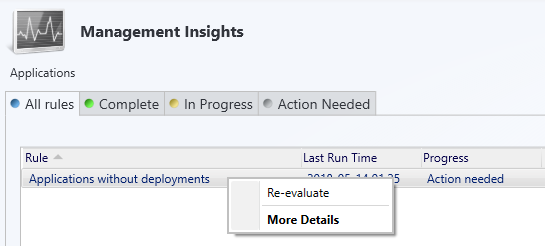
Each rule is evaluated weekly. You can re-evaluate a rule on demand by right-clicking the rule and selecting Re-evaluate.
The logs file for Management Insight is SMS_DataEngine.log which is located on your SCCM server.
Applications without deployment
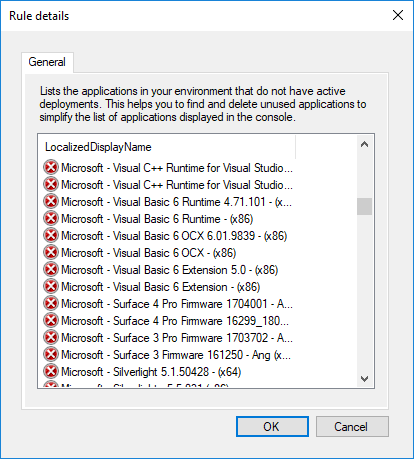
Lists the applications in your environment that do not have active deployments. This rule helps you find and delete unused applications to simplify the list of applications displayed in the console.

Use this list to clean up unwanted collections or use our script to automatically delete empty collections without deployments.
Set of rules to help integrate cloud services to your SCCM infrastructure.

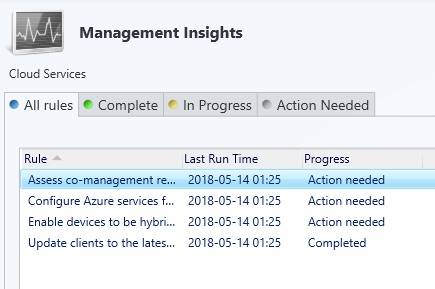
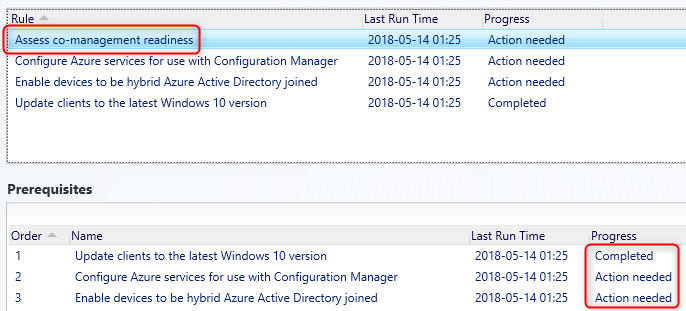
Helps you understand what steps are needed to enable co-management based on 3 rules. In our example the rules show that we need to take some action for Co-Management Readiness :
Lists collections in your environment that have no members. This rule is very useful as collections are one of the more resource intensive objects in your SCCM infrastructure.

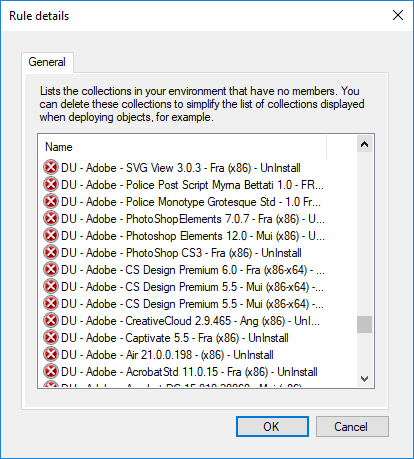
Use this list to clean up unwanted collections or use our script to automatically delete empty collections without deployments.
Non CB-Client Versions
Lists all clients whose versions are not at the Current Branch client version. (Prior vSCCM 1511)

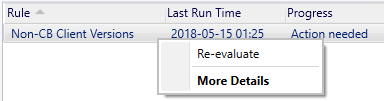
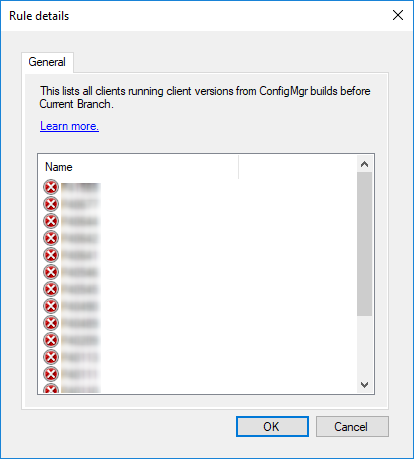
Use this list to update your clients to the latest version. If you want to build a collection based on that, see our SCCM Set of Operational collections which included an All Clients Not Latest collection.
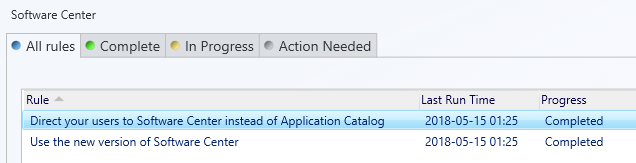
Check if users have installed or requested applications from the Application Catalog in the last 14 days. Support for the Application Catalog website ends with the first update released after June 1, 2018.
If you are not compliant on this one, we recommend redirecting users to Software Center instead of the Application Catalog.
Since 1802, the previous version of Software Center is no longer supported.
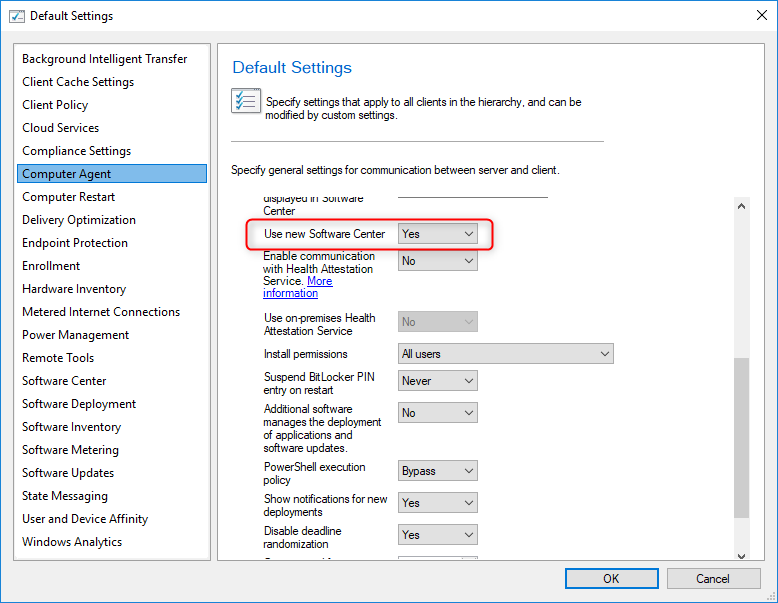
Set up clients to use the new Software Center by enabling the client setting Computer Agent / Use new Software Center
[ratings]

Please fill out the form, and one of our representatives will contact you in Less Than 24 Hours. We are open from Monday to Friday.

Thank you for subscribing to our newsletter or requesting a quote. You will receive our next month's newsletter. If you have requested a quote, we will get in touch with you as soon as possible.

Something went wrong!


Thank for your reply!