The third upgrade for SCCM Current Branch is now available. This post is a complete step-by-step SCCM 1610 upgrade guide. If you’re looking for a complete SCCM installation guide, see our blog series which covers it all. You can’t install this upgrade if you are running SCCM 2012. You need to be at least at SCCM 1511.
Installing SCCM upgrades is very important to your infrastructure. It adds new feature and fixes lots of issues, which some of them are important.
If you’re not familiar with the new SCCM servicing model, read our New Update and Servicing section of the 1602 upgrade post which explain it all.
Similar to SCCM 1606, if you need to make a new SCCM installation, you can’t install SCCM 1610 directly. You need to install SCCM 1511 (or 1606) first and then apply SCCM 1610 from the console. SCCM 1606 is the baseline version if you’re starting from scratch.
*If you are running SCCM 1511, 1602 or 1606, the latest updates will be replaced by SCCM 1610 in the SCCM Console after installation. If you are on SCCM 1511, you won’t be able to install 1602 or 1606 after 1610. You can skip all previous versions and install SCCM 1610 directly which contains all 1602 and 1606 fixes and features.
If you’ve been installing SCCM Technical Preview in your lab, SCCM 1606 contain most features included in the latest Technical Previews (1605 and up).
1610 includes lots of new features and enhancements in Windows 10 and Office 365 management, application management, end user experience, client management and also includes new functionality for customers using Configuration Manager in hybrid mode with Microsoft Intune.
Consult the Summary of changes in System Center Configuration Manager version 1610 article for a full list of changes.
Consult this Technet article for a full features list. 1606 also applies the latest KB/fixes to fix known bugs, including KB3202796, KB3192616, KB3186654 and KB3180992
Here’s our list of favorite features :
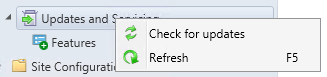
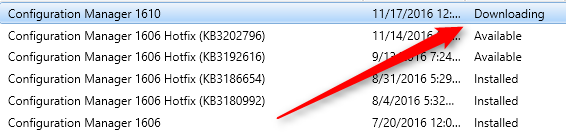
Downloading and installing this update is done entirely from the console. There’s no download link, the update will appear in your console once the Service Connection Point is synchronized.
If you’re running a multi-tier hierarchy, start at the top-level site in the hierarchy. After the top-level site upgrades, you can begin the upgrade of each child site. Complete the upgrade of each site before you begin to upgrade the next site. Until all sites in your hierarchy are upgraded, your hierarchy operates in a mixed version mode.
Before applying this update, we strongly recommend that you go through the upgrade check list provided on Technet. Most importantly, initiate a site backup before your upgrade.
In this post, we’ll be updating a standalone Primary Site Server, consoles and clients.
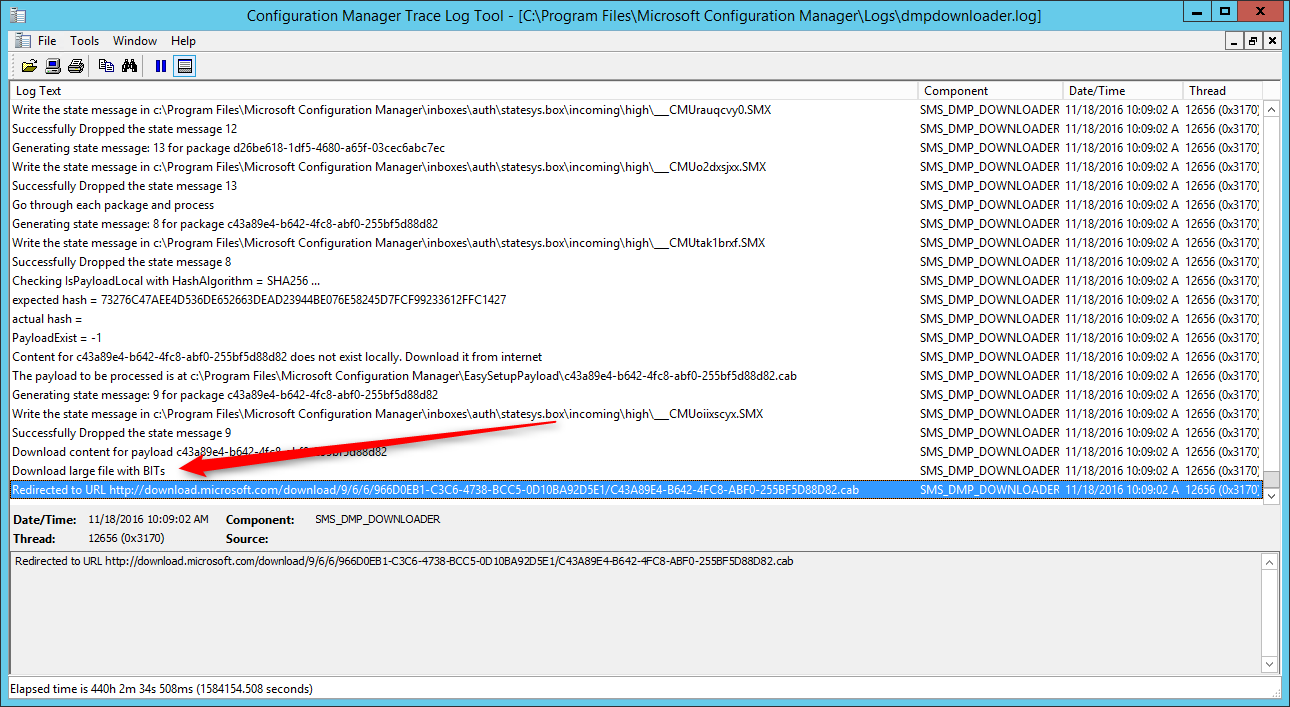
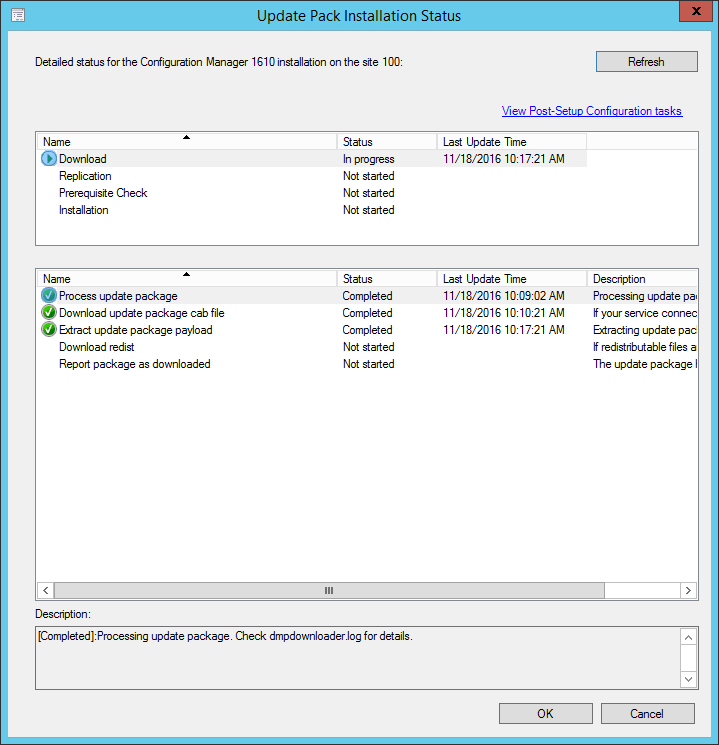
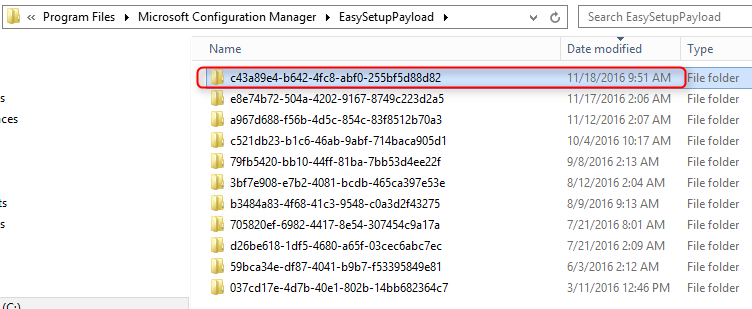
Before installing, check if your site is ready for the update :

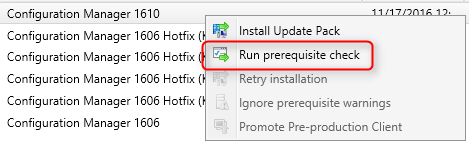
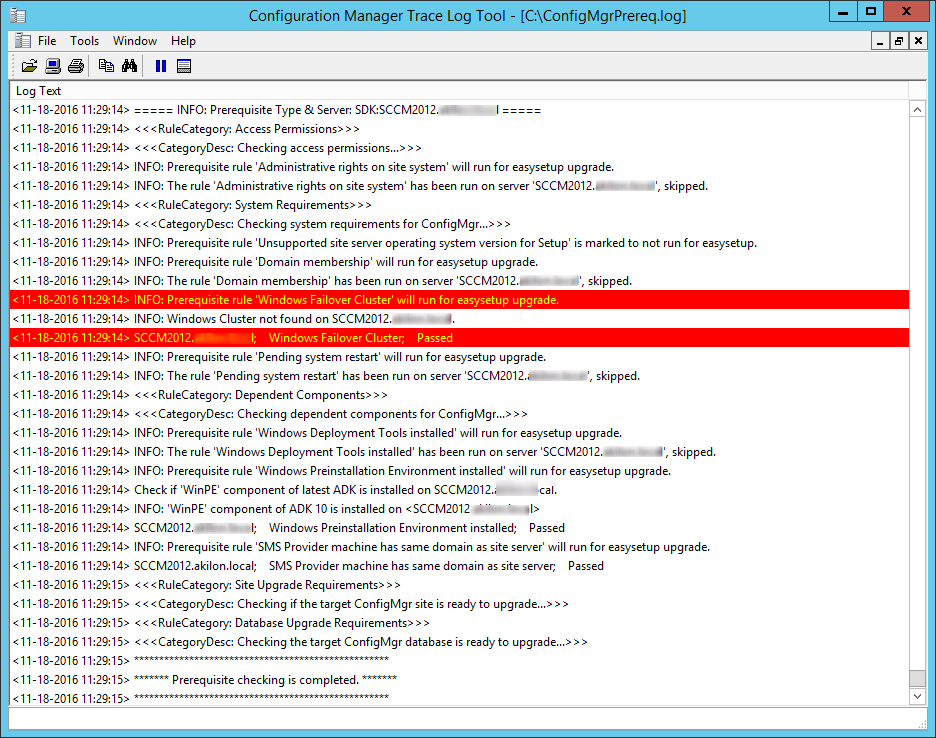
Before launching the update, we recommend to launch the prerequisite check :
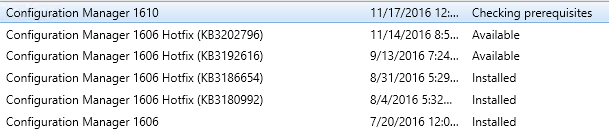
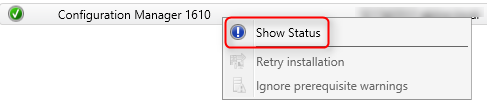
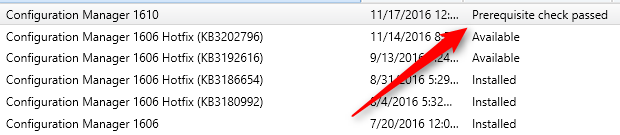
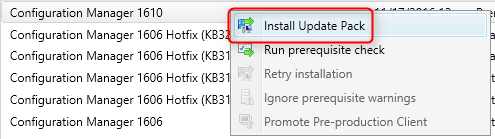
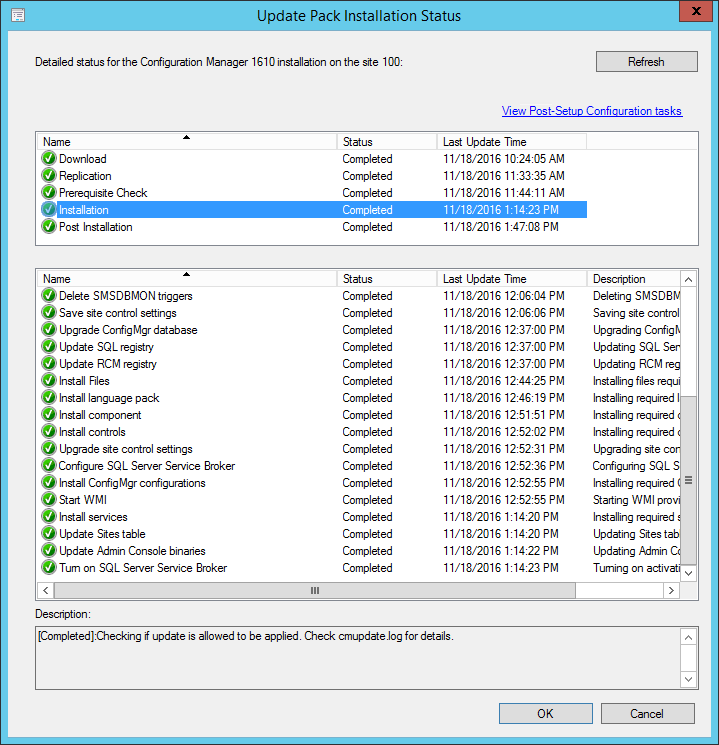
We are now ready to launch the SCCM 1610 update. At this point, plan about 45 minutes for the update installation.
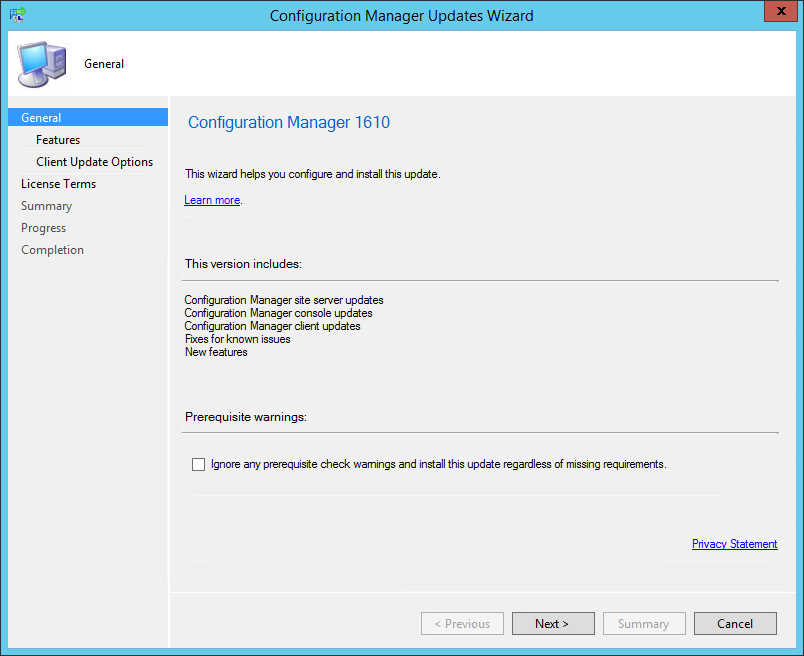
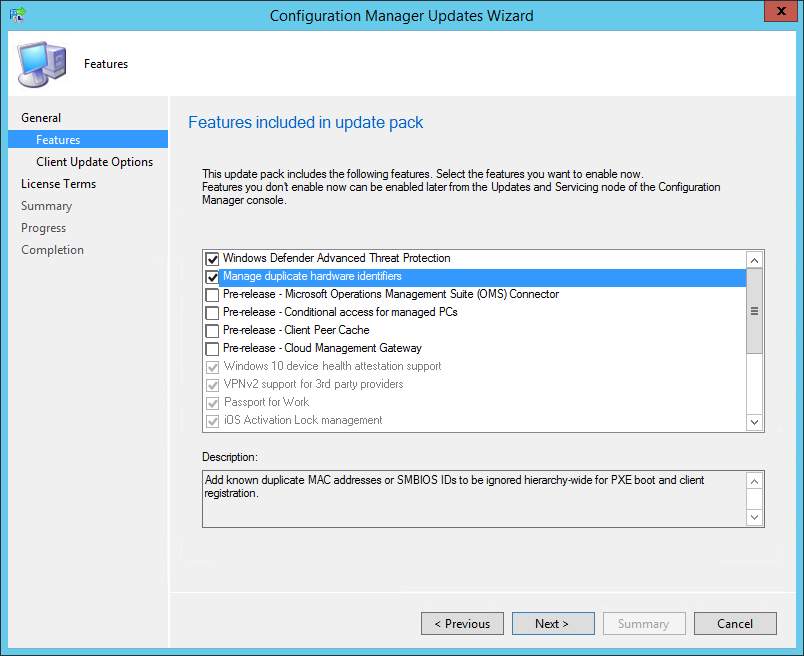
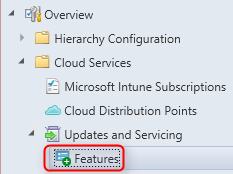
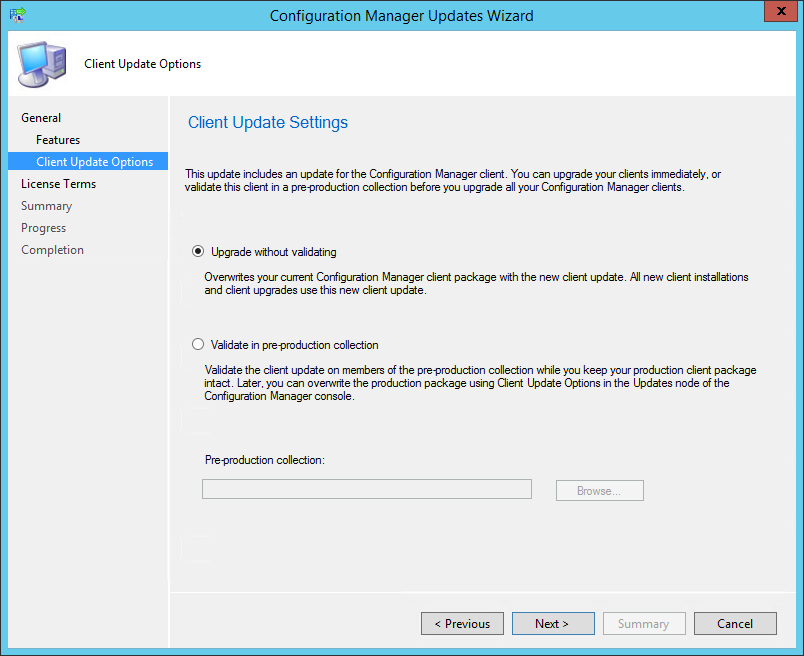
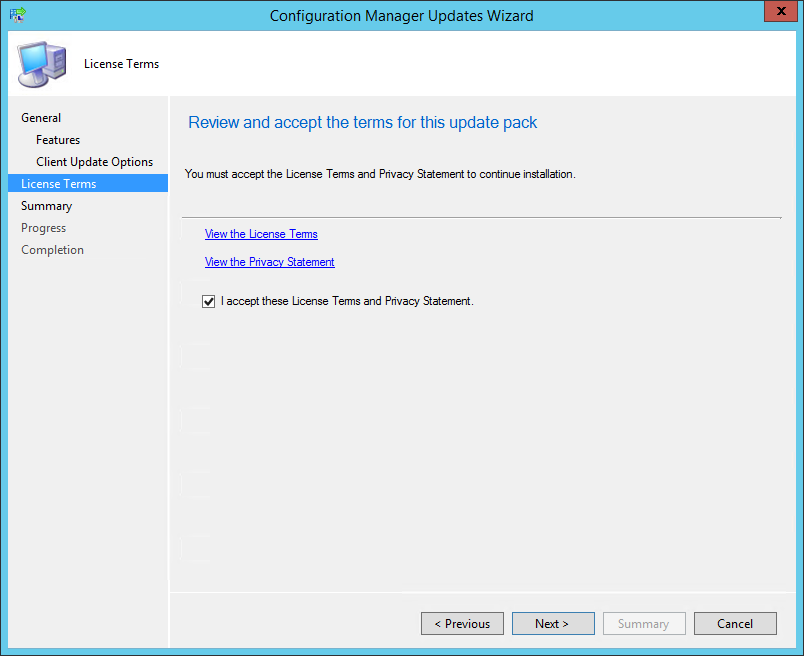
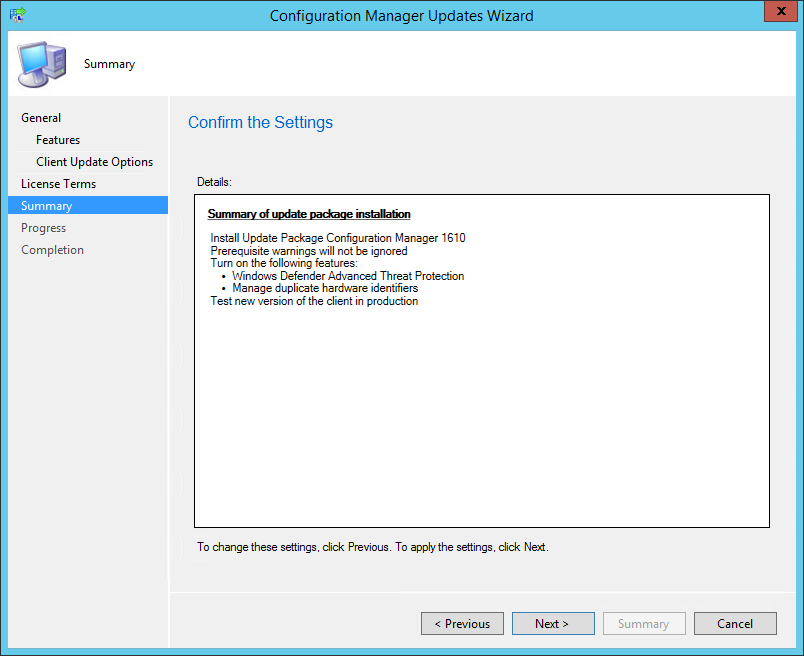
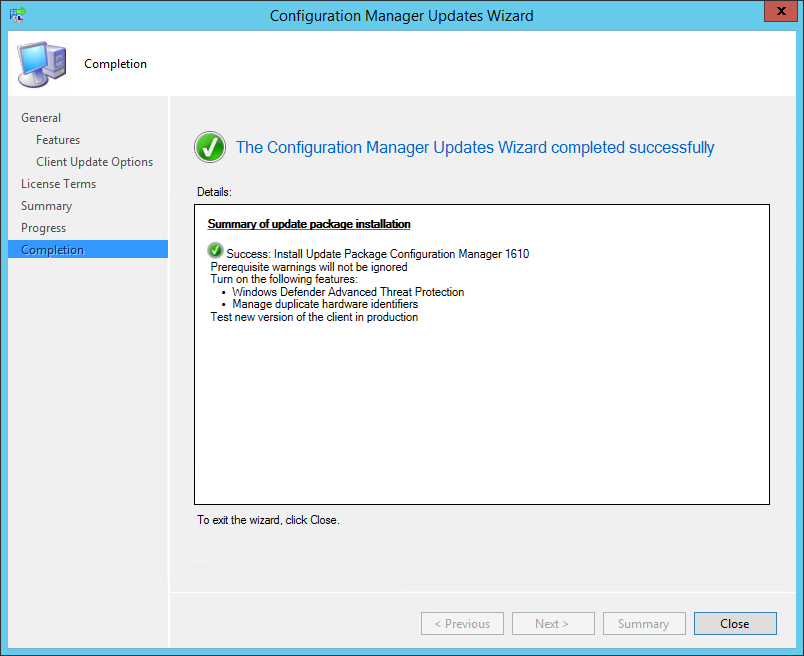
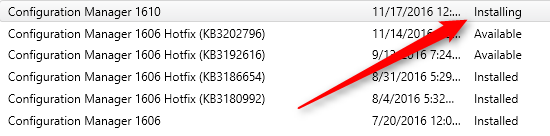
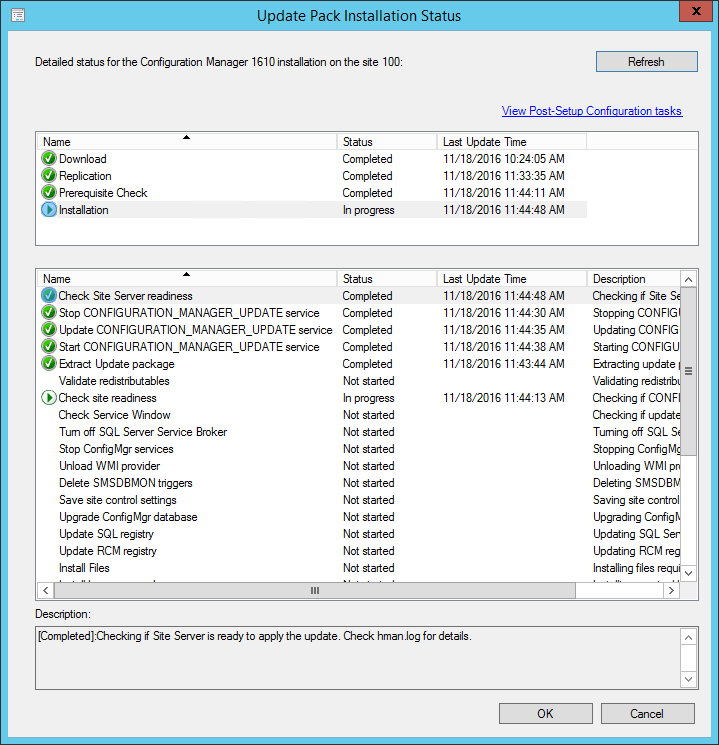
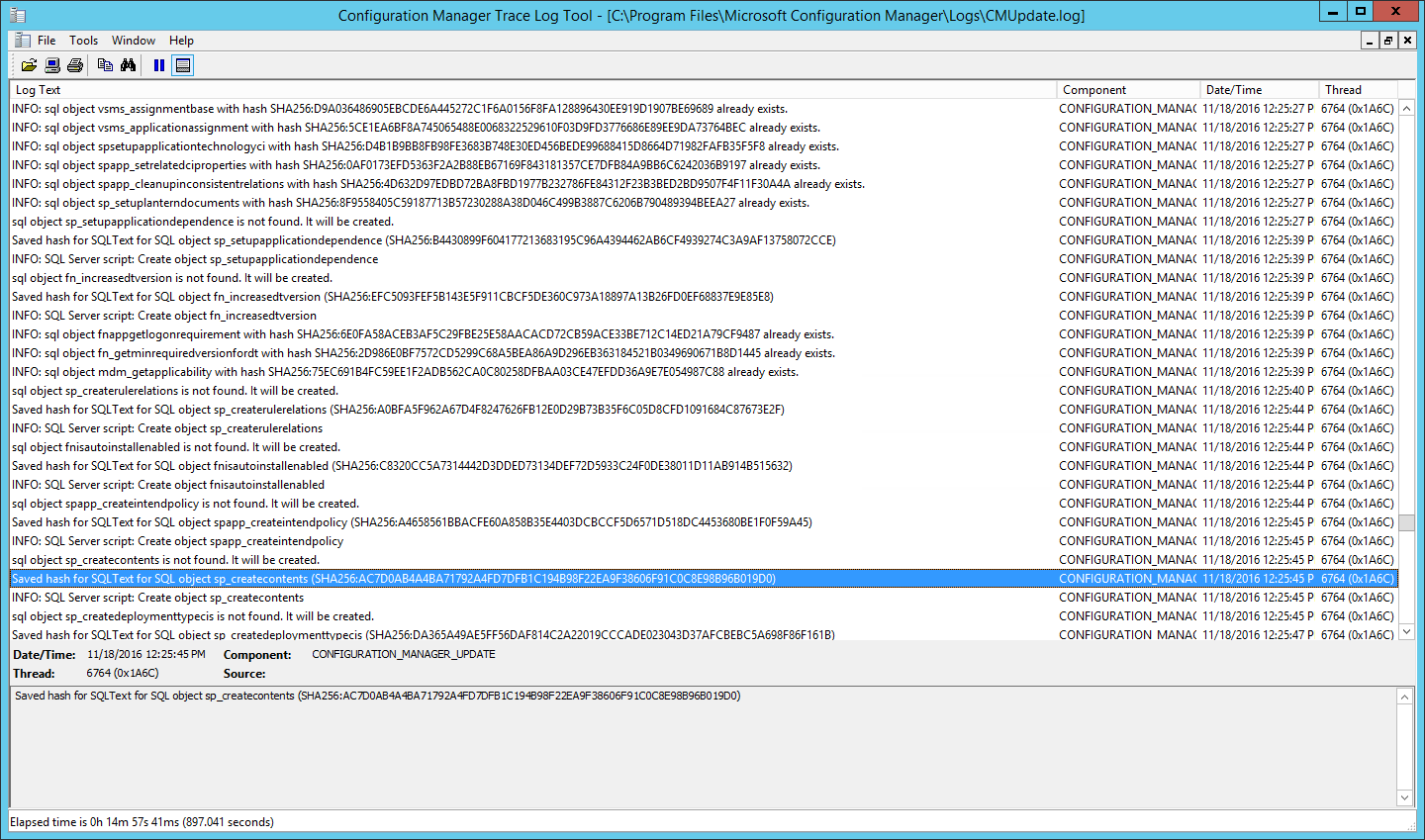
[su_box title=”Warning” style=”glass” title_color=”#F0F0F0″]We’ve done numerous SCCM 1610 installation. Some installation start a couple of minutes after you complete the wizard but we’ve seen some installation starts after a 10 minutes delay. Do not reboot or restart any services during this period or your update could be stuck in “Prerequisite check passed” status and all other options greyed out. There’s actually no officially documented methods by Microsoft to fix that. Patience is the key ![/su_box]
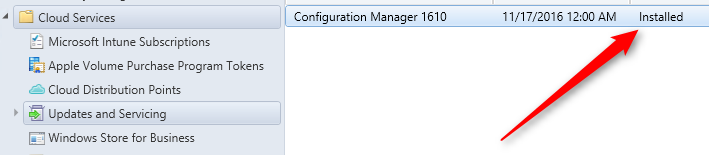
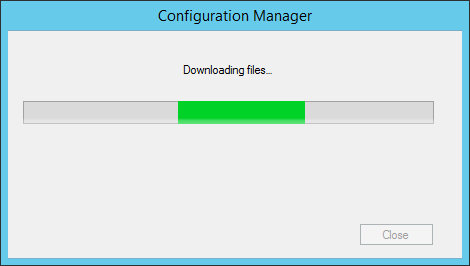
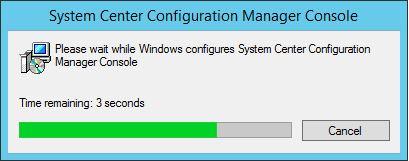
As previous Cumulative update, the console has an auto-update feature. At console opening, if you are not running the latest version, you will receive a warning and the update will start automatically.
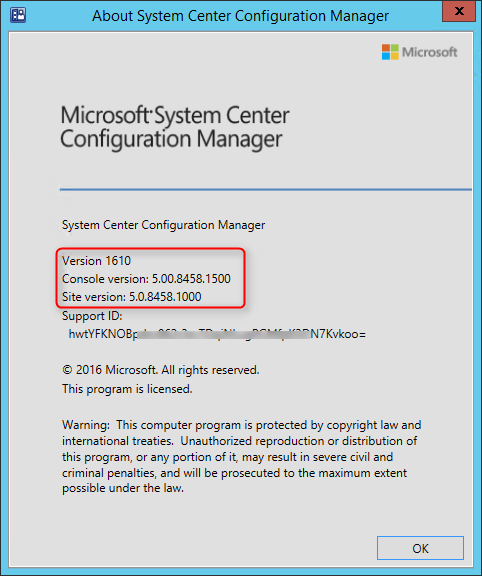
After setup is completed, verify the build number of the console. If the console upgrade was successful, the build number will be 5.0.8458.1500. You can also notice that Version 1610 is stated.
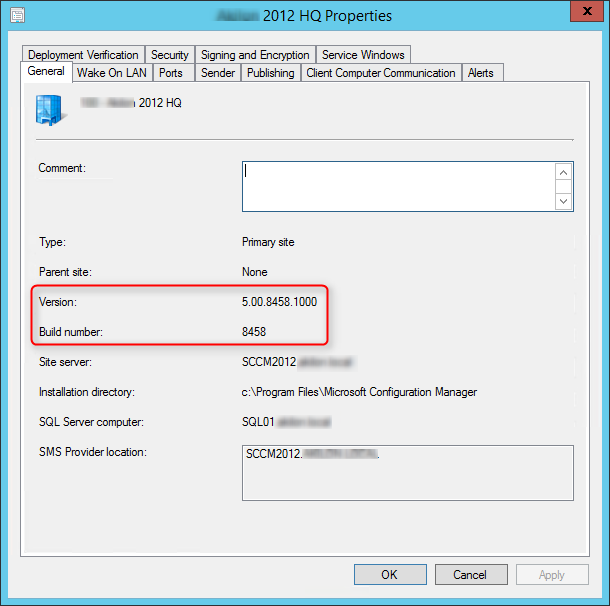
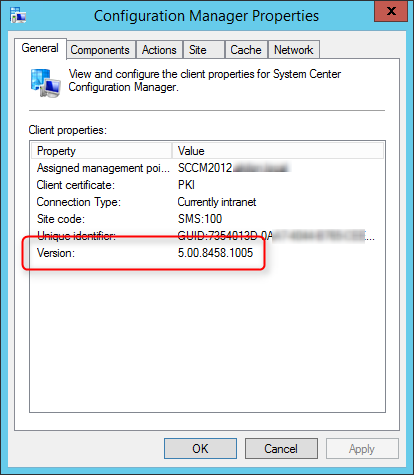
The client version will be updated to 5.00.8458.1005 (after updating, see section below)
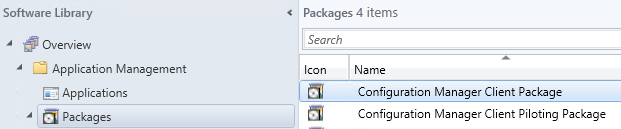
You’ll see that the 2 client packages are updated :
Boot images are automatically updated during setup. See our post on upgrade consideration in large environment to avoid this if you have multiple distribution points.
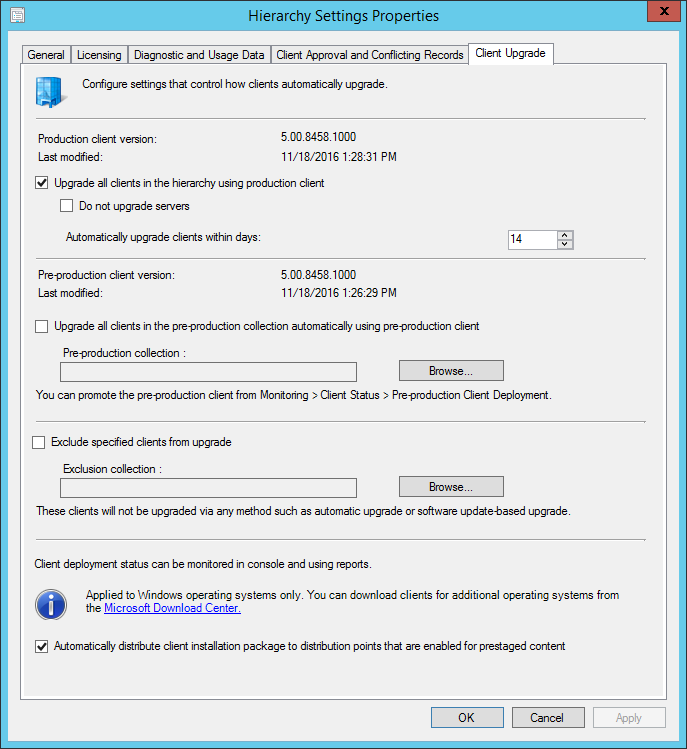
Our preferred way to update our clients is by using the Client Upgrade feature : (You can refer to our complete post documenting this feature)
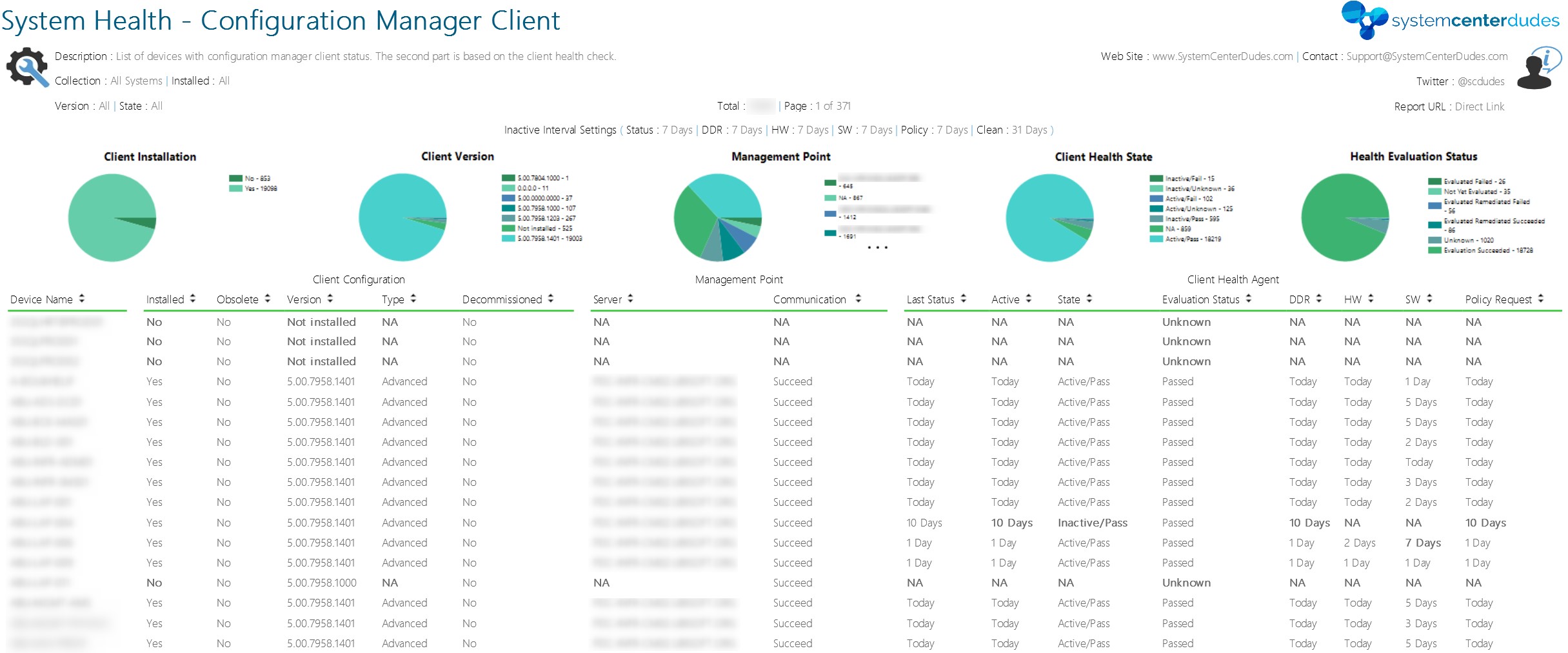
You can see our SCCM Client version reports to give detailed information about every clients versions in your environment. It’s the easiest way to track your client updates.
You can also create a collection that targets clients without the latest client version. I use it to monitor which client haven’t been updated yet.
Here’s the query to achieve this: (You can also refer to our Set of Operational Collection Powershell Script which contains this collection)
[pastacode lang=”sql” manual=”select%20SMS_R_SYSTEM.ResourceID%2CSMS_R_SYSTEM.ResourceType%2CSMS_R_SYSTEM.Name%2CSMS_R_SYSTEM.SMSUniqueIdentifier%2CSMS_R_SYSTEM.ResourceDomainORWorkgroup%2CSMS_R_SYSTEM.Client%20from%20SMS_R_System%20where%20SMS_R_System.ClientVersion%20!%3D%20’5.00.8458.1005′” message=”” highlight=”” provider=”manual”/]
Happy updating ! 🙂

Please fill out the form, and one of our representatives will contact you in Less Than 24 Hours. We are open from Monday to Friday.

Thank you for subscribing to our newsletter or requesting a quote. You will receive our next month's newsletter. If you have requested a quote, we will get in touch with you as soon as possible.

Something went wrong!


Thank for your reply!